• 1
  • 2
  • 3
  • 4
  • 5
  • 6
  • 7
  • 8
  • 9

SOCIETY


Contact

Archéo-Nil Executive Committee


President

Cette adresse e-mail est protégée contre les robots spammeurs. Vous devez activer le JavaScript pour la visualiser.
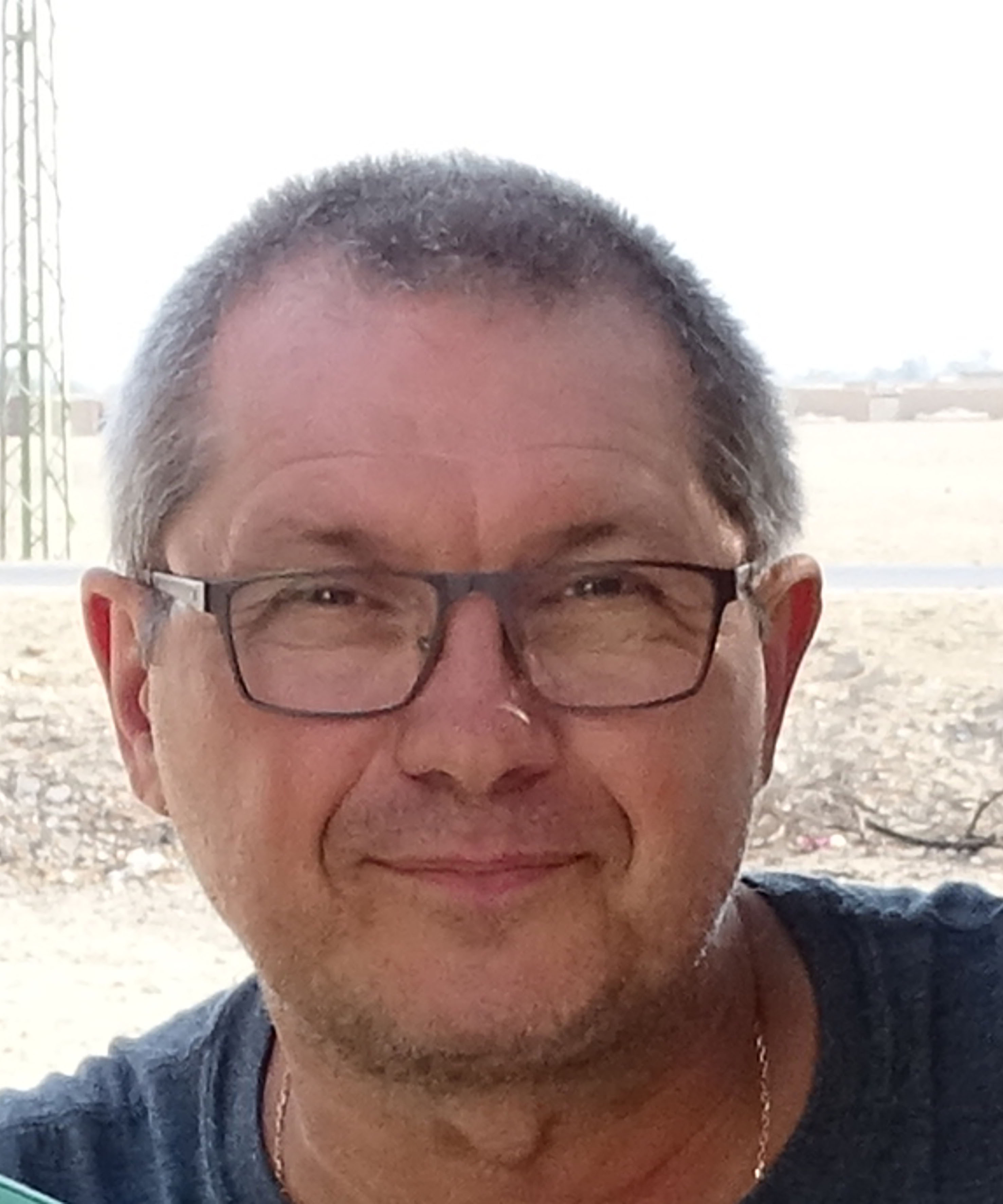
 YTristant web

Yann Tristant studied at the École du Louvre and the Sorbonne. After obtaining his PhD from the École des Hautes Études en Sciences Sociales (EHESS), focusing on the Nile Delta before the Pharaonic period, he joined the Institut français d’archéologie orientale (IFAO, Cairo) as a scientific member, then the Department of History and Archaeology at Macquarie University. He is professor at KU Leuven (Belgium) since 2021 where he teaches the archaeology of Egypt. His main areas of expertise are protohistory, funerary archaeology and human-environment relations. He has worked on many sites in Egypt. He is currently preparing the publication of the excavations carried out at Abu Rawash (Memphite region), an archaeological survey project in the Wadi Araba (Eastern Desert) and is leading the excavation of the Dendara Necropolis (Upper Egypt).


Vice-president

Dominique Farout

 DFarout2

Dominique Farout is an art historian and epigraphist. He has been a member of Archéo-Nil since its foundation. He teaches Egyptian language and civilization at the Ecole du Louvre and the Institut Khéops, and is a member of the PLH-Crata of the Jean-Jaurès University in Toulouse. He participated in the excavations of Abu Rawash from 2002 to 2006, Tell Edfu from 2005 to 2007 and the Hatnub quarries since 2016.


Secretary

Marie-Noël Bellessort

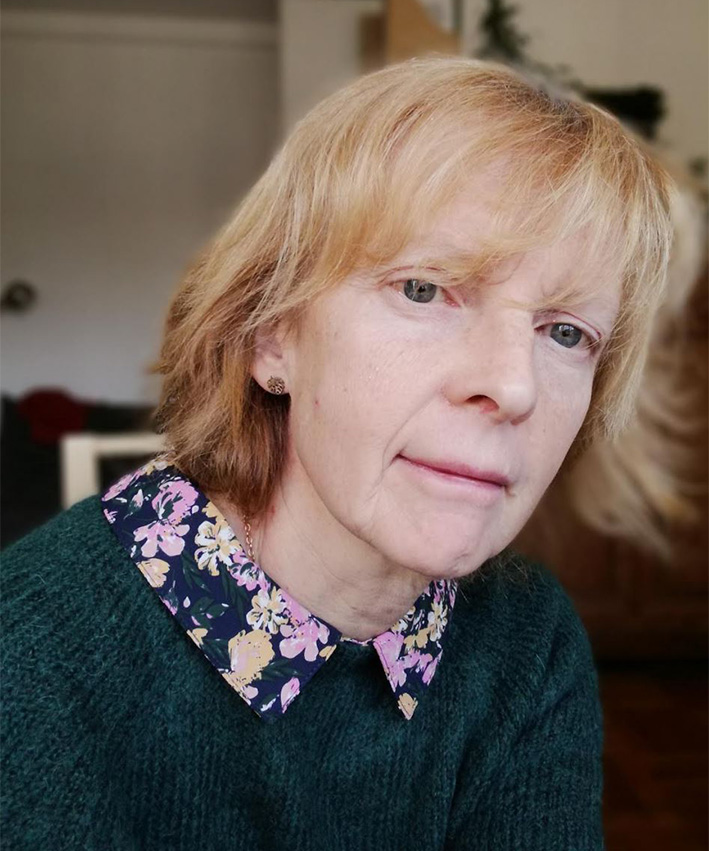
NNBellessort.JPG

Graduate of the Ecole du Louvre, Marie-Noël Bellessort is a professor of art history at the Penninghen School of Graphic Arts and Architecture, and a tutor in Egyptian archaeology at the Ecole du Louvre. Her research focuses on board games in the context of Egypt and the Near East. 


Deputy Secretary

Chloé Girardi

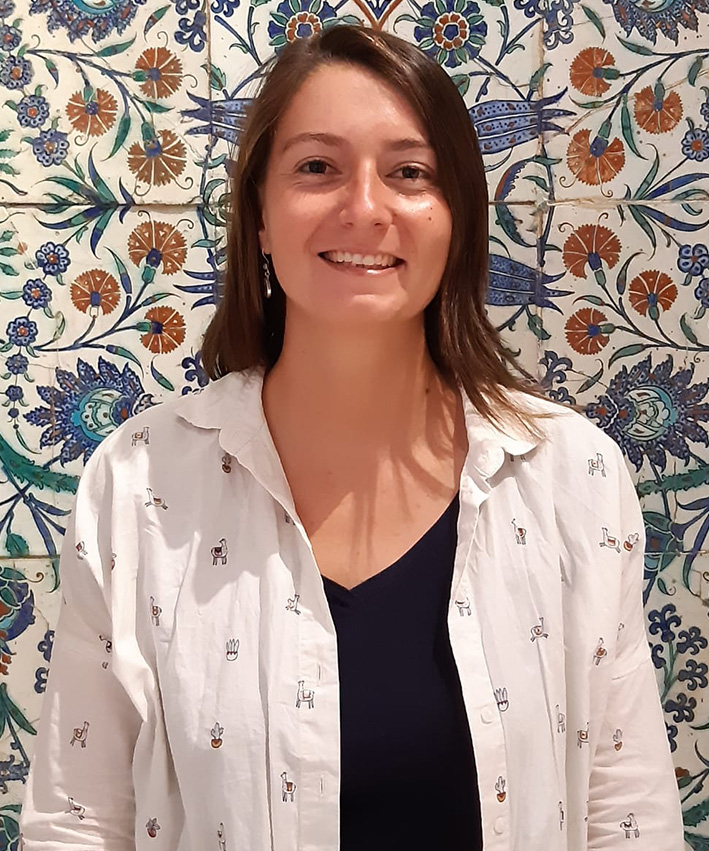
 CGirardi.jpg

Archaeo-anthropologist at Éveha, Dr Chloé Girardi is a specialist in predynastic Egyptian mortuary practices and the first six dynasties. She holds a doctorate in archaeology from the University Paul-Valéry Montpellier 3 and is now an associate researcher at the ASM (Archaeology of Mediterranean Societies) laboratory of the same university. Trained in the principles and methods of archaeothanatology, she participates in the excavation of funerary sites in France and abroad (Saudi Arabia, Crete, Egypt and the Palestinian Territories). She is a member of the Dendara archaeological mission since 2018. 


Treasurer

Laëtitia Maggio

LMaggio web

Graduate of the Ecole du Louvre, Master in Roman History from the University of Paris IV-La Sorbonne and former student of the Institut National du Patrimoine, Ms. Laetitia Maggio is currently curator at the Regional Archaeology Service in Lille, within the Hauts-de-France Regional Directorate of Cultural Affairs. She also teaches Egyptian archaeology and Roman history at the University of Lille and the University of Valenciennes. Her research focuses on Ramesside stelae and the cult of the royal colossus of the New Empire.


Project manager (communication)

Jane Maurisson

 Jane Maurisson

Jane Maurisson is a graduate of the École du Louvre and is currently a PhD candidate at Sorbonne Université within the Orient & Méditerranée laboratory. She specializes in Egyptian jewelry made from semi-precious stones. She has participated in two excavation campaigns in the Levant and is currently a member of the Wadi el-Hudi Expedition, an American archaeological mission studying amethyst mines in the Eastern Desert.


Project manager (webinars)

Alice Leplongeon

 ALeplongeon.jpg

Former student of the Ecole du Louvre and Doctor of Prehistory from the National Museum of Natural History in Paris, Dr Alice Leplongeon is currently a post-doctoral student at KU Leuven, Belgium. Her research focuses on the prehistory (Palaeolithic) of East and North-East Africa, and in particular on the interactions between human populations and their environment over the last 50 millennia


Project manager

Bénédicte Lhoyer


BLhoyer web

Holder of a doctorate in Egyptology from the University Paul-Valéry Montpellier 3 and a postgraduate diploma from the Ecole du Louvre, Dr Bénédicte Lhoyer is a specialist in disability, illegality and marginality in ancient Egypt. Currently in post-doctoral studies at the CNRS (UMR 8560 - Centre Alexandre Koyré), she is also an associate professor at the Conservatoire National Supérieur de Musique et de Danse de Paris, and teaches at the École du Louvre. She has excavated in the Levant and in Egypt. 


Honorary Executive Committee members

President: BÉATRIX MIDANT-REYNES, PRESIDENT AND FOUNDER (1990-2011) | Honorary president: JEAN LECLANT (1990-2011) | Vice-president: JEAN-CLAUDE L’HERBETTE (1990-2010), EVELYNE FAIVRE-MARTIN (2011-2018) | Secretaries: NATHALIE BUCHEZ (1990), PATRICK GAUTIER (1991-1994), MICHELLE DE SAINTILAN (1995-1996), ALAIN FORTIER (1996-2006), CHRISTIANE HOCHTRASSER-PETIT (2006), EVELYNE FAIVRE-MARTIN (2007-2010), DOMINIQUE FAROUT (2007-2010), CÉCILE LANTRAIN (2011-2014), LAËTITIA MAGGIO (2015-2018) | Treasurers PATRICK GAUTIER (1990-1996), MICHELLE DE SAINTILAN (1997-2000), CHANTAL ALARY (2001-2017) | Communication managers: CAMILLE AUBAUD (1990-1992), CHRISTIANE PETIT (1997-2006)
News

AGM 2026

Our next Annual General Meeting will take place on Monday 22 January 2026 at 6:00 pm at the École du Louvre, Palais du Louvre, Place du Carroussel, Porte Jaujard, Paris 1er (métro Palais-Royal/Musée du Louvre, lines 1 and 7).

It will be followed by the lecture (in French) of Nathalie Buchez (INRAP Hauts-de-France, UMR 5608 TRACES) and Samuel Guérin (Inrap Hauts-de-France, UMR 8164 HALMA)


Tell el-Iswid et les sociétés prédynastiques deltaïques : de la culture de Basse-Égypte à l’unification politique

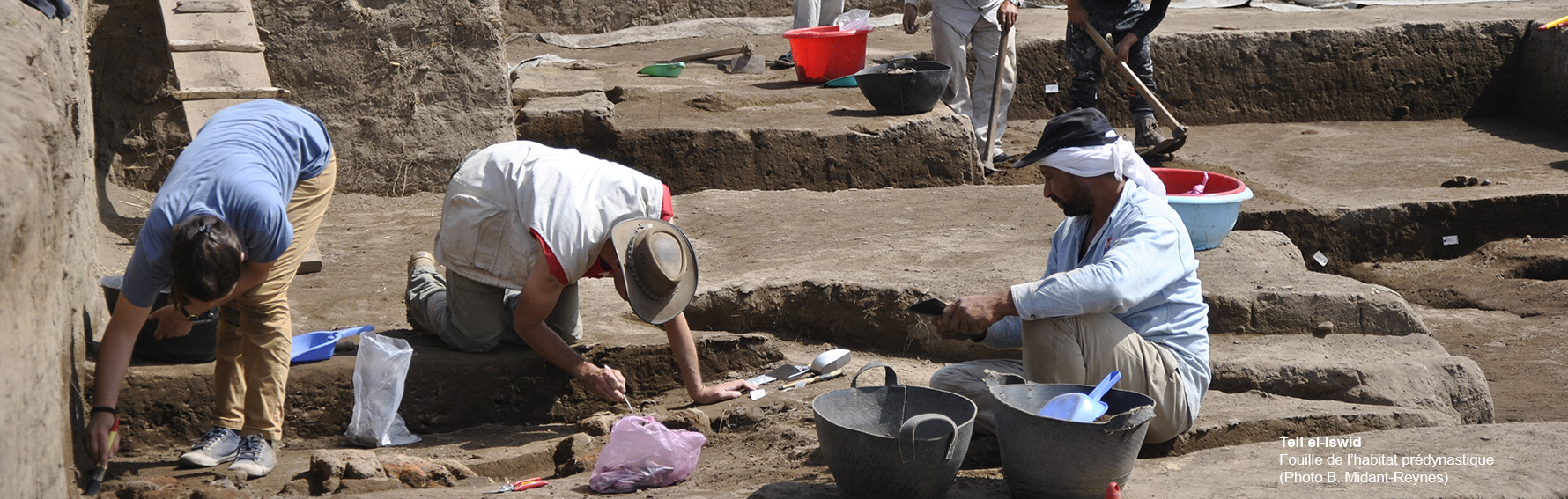
 Le Tell d’Iswid localisé dans le delta oriental est le fait d’une occupation continue entre 3800 BCE et 3100 BCE. Il offre l’opportunité d’étudier, du point de vue des communautés du nord, de Basse-Égypte, longtemps restées dans l’ombre par rapport à celles du sud, de Moyenne/Haute-Égypte, les évolutions majeures qui s’opèrent au cours au IVe millénaire pour déboucher en fin de millénaire sur une monarchie et une culture unifiée.

Le techno-complexe de Basse-Égypte (ou de culture Bouto) semble se démarquer du Néolithique local et suivre une trajectoire évolutive propre, marquée par une forme de spécialisation et par là même de complexification sociale, jusque 3400/3300 BC et les bouleversements qui découlent du développement des contacts avec la Moyenne/Haute-Égypte.

On aborde alors l’une des questions parmi les plus largement débattues et qui a trait aux processus de formation de l’Égypte pharaonique : l’homogénéisation culturelle de la fin du IVe millénaire qui d’après nos travaux serait directement liées à l’unification politique et aux changement drastiques du système de production qui l’accompagne.


Tell el-Iswid and the Predynastic Deltaic Societies: From Lower Egyptian Culture to Political Unification

 The site of Tell el-Iswid, located in the eastern Nile Delta, exhibits continuous occupation from 3800 to 3100 BCE. It provides a unique opportunity to study—from the perspective of the northern communities of Lower Egypt, long overshadowed by those of the south (Middle/Upper Egypt)—the major transformations that took place during the 4th millennium BCE, culminating at the end of the millennium in a unified monarchy and culture.

The Lower Egyptian techno-complex (or Buto culture) appears to diverge from the local Neolithic and follow its own evolutionary trajectory, characterized by increasing specialization and, consequently, social complexity, up to 3400/3300 BCE. This period marks a turning point, as profound changes arose from the intensification of contacts with Middle/Upper Egypt.

This leads to one of the most hotly debated questions concerning the formation of pharaonic Egypt: the cultural homogenization of the late 4th millennium BCE, which, according to recent research, is directly linked to political unification and the drastic changes in production systems that accompanied it.


News


Affiche Origins7

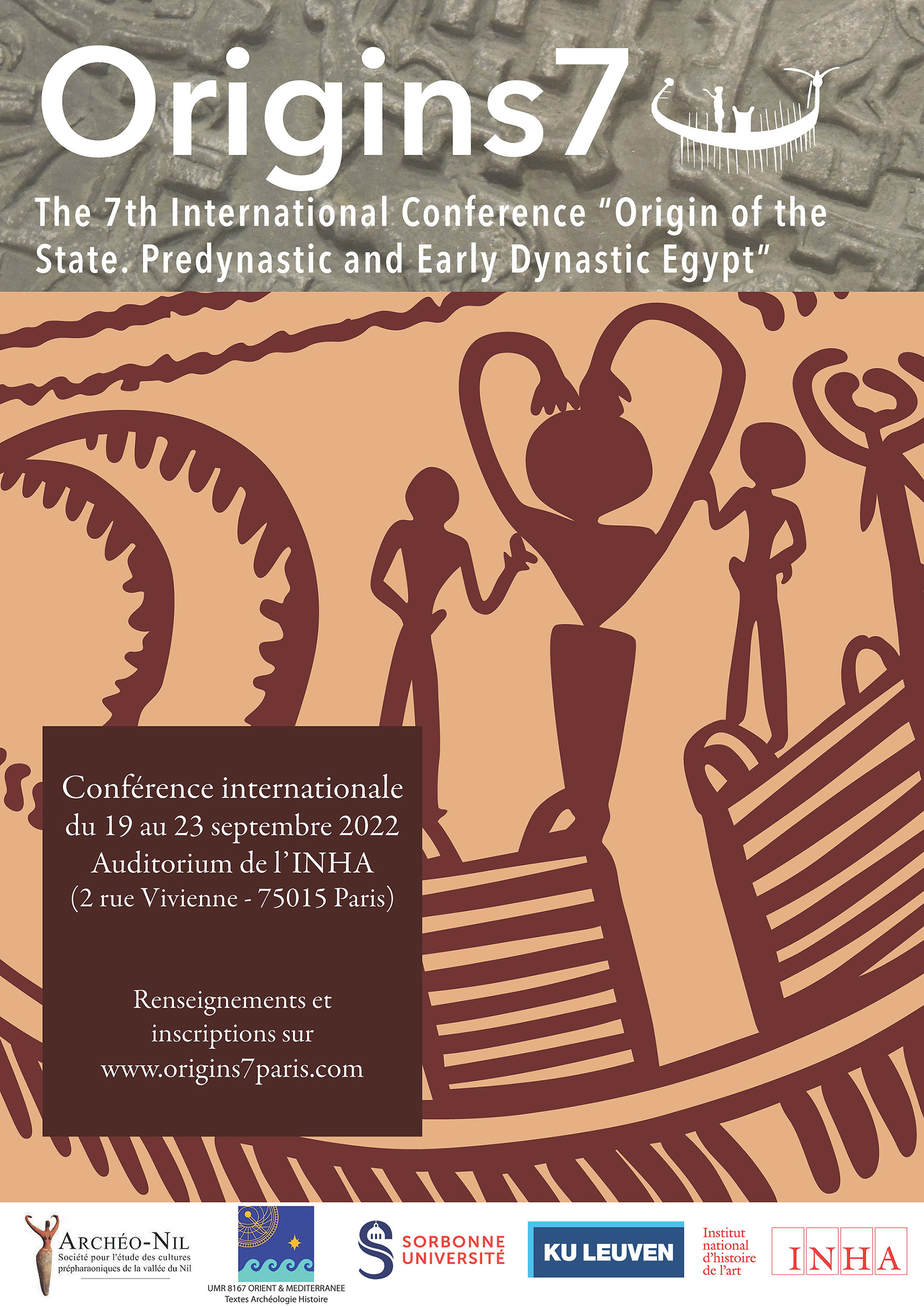
Origins7 Conference in Paris!

19-23 September 2022

Paris hosted the 7th edition of the Origins international conference dedicated to the study of Predynastic and Early Dynastic cultures of the Nile Valley. For five days, specialists in the field will present their work and discuss the most recent results. Archéo-Nil is a partner of the event.

For more information: www.origins7paris.com


News

 25/06/2021

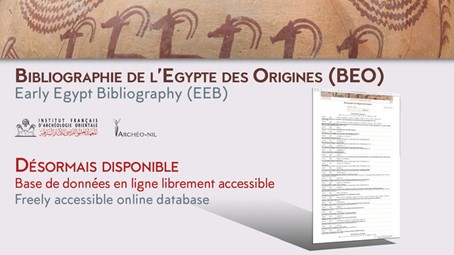
Early Egypt Bibliography (EEB)

BEO


For over 25 years, the “Bibliography of the Prehistory and the Early Dynastic period of Egypt and northern Sudan” has been the essential bibliographical research tool regarding the Prehistoric, Predynastic and Early Dynastic periods in Egypt and northern Sudan (up to the latitude of Khartoum). The original bibliography was published in 1995 by Stan Hendrickx, with yearly updates in the journal Archéo-Nil, from 2010 onwards in collaboration with Wouter Claes. With the generous aid and collaboration of the IFAO (Christian Gaubert) and Archéo-Nil (Yann Tristant), the EEB is now available as a freely accessible and online database at

https://www.ifao.egnet.net/bases/beo/

News

05/05/2022

persee.fr

Archéo-Nil is now available open access on Persée!

Our journal is now available open access on the website Persée nd includes the volumes from 1990 until 2021. Each article has a doi and keyword search is now possible. You can find them from the Journal tab or directlty on Persée website.

More articles will be available soon. Happy reading!


More


Contact

Archéo-Nil

Archéo-Nil

Archéo-Nil is a non-profit society created in 1990 to promote the study of the pre-pharaonic cultures of the Nile valley (newsletters, conferences, exhibitions, conferences, etc.) and to assist associated research and archaeological expeditions.”Archéo-Nil is a non-profit society created in 1990 to promote the study of the pre-pharaonic cultures of the Nile valley (newsletters, conferences, exhibitions, conferences, etc.) and to assist associated research and archaeological expeditions.


Archéo-Nil

Collège de France

11 Place Marcelin Berthelot

75231 Paris

France

secretariat@archeonil.fr

  Facebook   Twitter